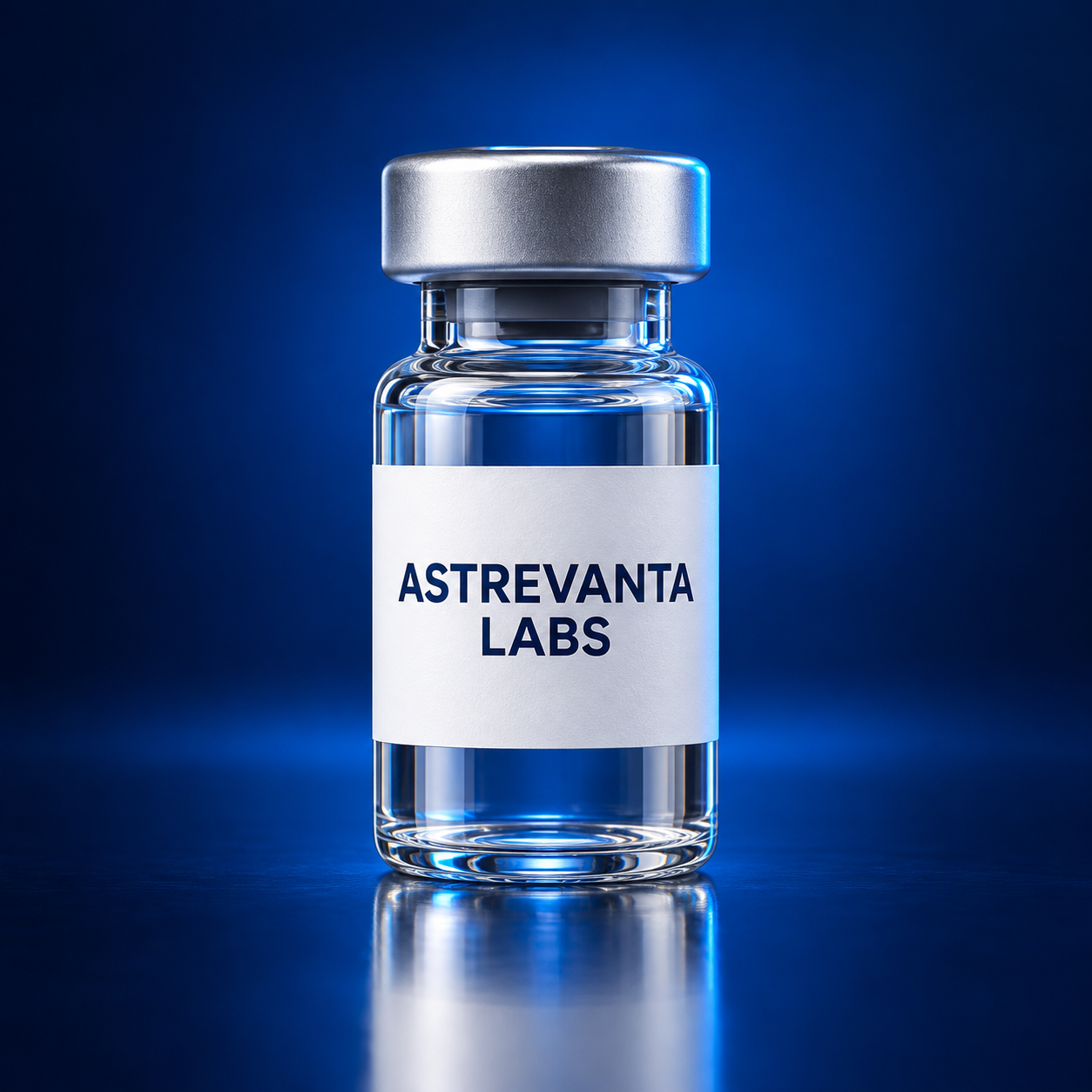
01Identity
- Name
- BPC + TB
- Description
- Declared BPC + TB combination
- Type
- Mixture listed in the catalogue
- Research topics
- Declared composition · Compatibility · Batch documentation
02Research areas
Declared composition
Components and quantities described in the supplied catalogue.
Compatibility
A mixture or solvent requires its own compatibility data.
Batch documentation
Certificate of analysis and reference-specific characteristics.
The topics above describe the available research or documentation.[1][2][3]
03Mechanisms studied
The catalogue offers equal parts of BPC and TB: BB4, BB10 and BB20.[1][2][3]
04Research & findings
05What can be concluded
They do not test these mixtures. Exact BPC and TB identities, stability and compatibility remain to be documented.[1][2][3]
06Formats & documentation
Formats indicate vial contents. For composition and analyses, consult documents matching the batch number.
Composition by format
- BB10 · 10 mg
- BPC 5 mg + TB 5 mg
- BB20 · 20 mg
- BPC 10 mg + TB 10 mg
The stated composition comes from the catalogue. It must be confirmed by batch documents.
07Related tutorials
Reconstitution
Understand concentration
Distinguish mass, final volume and concentration.
Read tutorialDocumentation
Check preparation and storage
Information to gather before laboratory handling.
Read tutorialTraceability
Read batch documents
Connect the reference, batch and original document.
Read tutorialResearch
Read a scientific guide
Understand what a publication shows and what it does not.
Read tutorial08Sources & references
[1] Supplied catalogue · 20 July 2026
Catalogue names, references and compositions; a commercial document, without clinical validation.[2] Chang et al. · 2014 · PubMed
Pentadecapeptide BPC 157 enhances the growth hormone receptor expression in tendon fibroblasts (new tab)[3] Esposito et al. · 2012 · PubMed
Synthesis and characterization of the N-terminal acetylated 17–23 fragment of thymosin beta 4 identified in TB-500 (new tab)